This blog offers information, and connections to nurture recent graduates. We welcome your participation on this and on our Facebook Page. The NTC continues to be deeply grateful to MEDITECH for its long history of support for this program. Over the years, MEDITECH has made it possible for the New Teacher Community to serve a vital role in helping our graduates to persist in a challenging, yet deeply rewarding profession.
Once again, a humanitarian crisis in Haiti is being met with misdirected aid and misrepresentations of the nation. It's a reminder of how critical it is to center Haitian voices in teaching its history. Consider these resources from Teaching for Change.
All too often in the midst of the reporting on Haiti, we hear that the country is the poorest nation in the Western Hemisphere. Seldom do students learn about the long history of U.S. involvement in Haiti which has directly contributed to that poverty and challenges today. Nor do they learn that Haiti's revolution of independence was the only one in the western hemisphere to result in freedom from tyranny for ALL people. We offer here children's and YA books to fill the gaps in the media and curriculum. We welcome additional suggestions.
Most of the books on these lists are linked for more information or purchase to Powells.com (an independent, unionized bookstore) and/or Bookshop (an indie bookstore platform). A small percentage from book sales through these links goes to Teaching for Change.
Titles with reviews on this site are noted with an asterisk (*).
Black History Month provides a key opportunity to launch this study. Haiti was the only nation in the western hemisphere to end slavery when it declared independence -- therefore the only nation to ensure true independence for all people.
Just as the study of Black History should be year round, so can our study of Haiti. For example, Professor Madison Smartt Bell suggests that "The Haitian Revolution, though seldom studied in proper detail outside Haiti, ought to be found near the center of any basic curriculum of American History."
The first time I ever thought about what my house was made of was when I learned it could be blown down. By wolves—big, bad wolves. Sure, “The Three Little Pigs” was supposedly a fairy tale about hard work. But for me, it was a warning about my own safety. And though I soon dismissed the fables read to me at bedtime as childish, that need to know I was safe never waned, especially as the wolves became real.
For others, the threat of the wolf may have shown itself in the malevolent magic of witches, or the stereotype machine, or the sense of inadequacy that comes with unrequited love. Are there bigger bogeymen than public embarrassment, stumbling through your first anything or causing unintentional offense? Each of us has a different threshold, a different perspective on what makes us feel unsafe. The cure for that feeling, any version of it, is found in realizing we are not alone. The function of story, especially for young people, is to bear witness to their lives, marking them as valuable and seen and part of something.
We experience this all the time in the stories we tell each other through casual conversation—Your grandma does that too?!—but the stories we read in books are ones we can experience over and over again. They serve as anchors, wings, compasses, road maps, magnifying glasses. They can make us feel safe by serving as a type of literal safe, where we can store our secrets with combinations and codes that feel tailored to us. In the same way we can live in them, books, in turn, can live in us, helping us become the dragon slayers and whistle-blowers and survivors we read about. We can become more of who we already are and feel safer within ourselves simply by meeting characters who call out to us by the names we call ourselves.
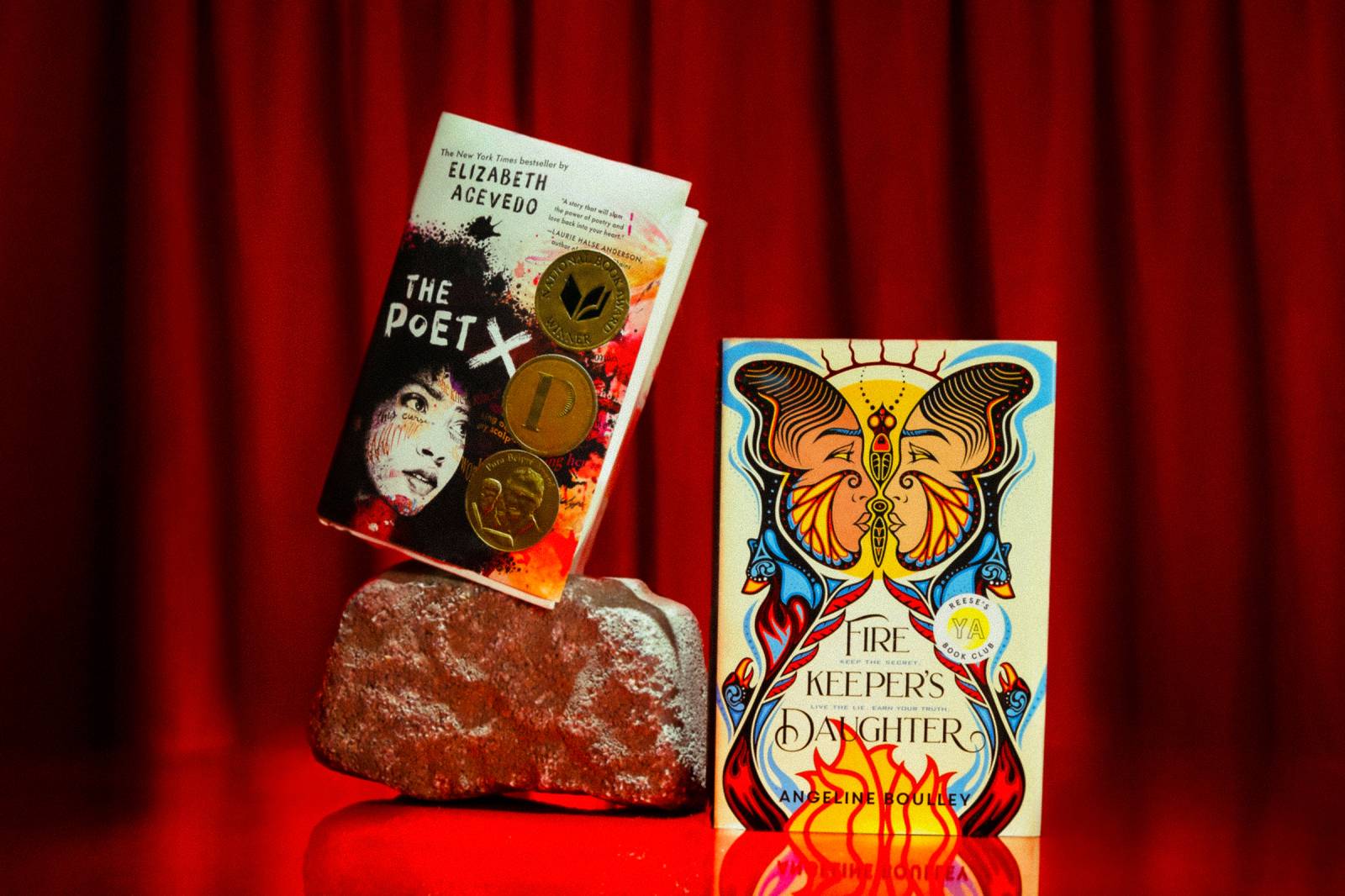
What must it feel like to be an inner-city Dominican-American girl struggling to be heard and then to find refuge in the story of Xiomara inThe Poet X? Or to be a young man working to come to terms with his sexuality and to stumble upon the story of Aaron inMore Happy Than Not? Or to be a Black teenager whose magic is constantly doubted and to crack the cover ofChildren of Blood and Bone? And how many times have we heard how Judy Blume’sAre You There God? It’s Me, Margaretconfirmed the obvious yet -overlooked—that girlhood, and all it entails, is nothing to be ashamed of? (Answer: millions.)
The books onthis list, and the countless other greats that aren’t—the contemporary, the historical, the fantastic, the irreverent, the sweet, the political and everything in between—can be brick houses for young people, frantically patting what feels like the flimsy walls of their lives, to confirm their safety. Or better yet, when they really work, books can serve as bricks for young people to build themselves into the houses they’re searching for. Houses that can’t be blown down. Houses with enough rooms to entertain and board countless guests as they grow into safe havens for others.
The new school year comes with high expectations. Students are excited and motivated to learn. Many, however, haven’t been socially connected for the past year and a half, so we need to have strategies in place that will build up relationship skills and encourage them to work together.
The activities below can encourage students to rebuild their relationships with each other through team-building activities that are fun and engaging and that reinforce collaboration, communication, and creativity.
Meme It is based on the game What Do You Meme? and can inspire a great deal of creativity. Using an option like Slidesgo, create slides with pictures that students can write captions for and make memes of, using the chat box in Zoom or their whiteboards. The first couple of slides can be examples. To turn this into a team activity, have students collaborate on memes together. At this point, share the document with them with editing privileges, and have them find appropriate pictures online that they can use for memes.
When everyone is ready, stop sharing and launch the document throughPear Deck, so that you can launch the teacher dashboard and read the memes to the students without giving their names and also edit out inappropriate photos or memes. Without Pear Deck, you can still run this game with students sharing their memes on whiteboards.
Teachers and students in fifth- and sixth-grade classes from several other schools shared Meme It with us, and it was the favorite activity of the year for many students.
Another activity is having students build a “kahoot” together based on commonalities. For my class, I preset the roles and teams on a common document for students to write some sample questions to start. Students can work together to create a kahoot to present to the rest of the class based on their common interests within the teams.
After each team has created their kahoot together, they share it with the class, with each team member taking turns presenting a question they created. With Kahoot, students can learn about their teammates and all the students in the class. They can also use academic kahoots to engage with each other and share information throughout the year.
Another team-building activity is a Google Slides presentation of a Guess Who/Clue type of game designed for Zoom that also works for in-person instruction. There are templates for setting this up onSlidesMania. Two teams of students come up with three clues that will lead to a reveal of their choice. Students can use breakout rooms in Zoom to work together, but this activity transfers easily to a regular classroom setting. Students present to the class, and other students try to guess what the reveal will be, using the Zoom chat box or whiteboards.
The activity First to Five enables students to find similarities and differences among classmates, making it a great way for them to share their interests with each other without having to compete to be heard. Students play this game in small groups and then follow up with a challenge activity that they present to the class. They can find others with common bonds or express their uniqueness with an uncommon trait. The teacher can duplicate or delete additional slides depending on the size of the class.
With the popular team-building game Would You Rather, teams come up with predictions of what they think will be the most prevalent answer to a question. This game, using a Pear Deck interactive slide, is a fun way for students to see their peers’ perspectives, but be sure to set strict parameters to keep this appropriate for school. Run it through on Pear Deck to see the popular vote, or have students write their choice on a whiteboard to see the results.
Another team-building activity is based on the classic Twenty Questions game, played over generations. I’ve used two versions:Give One, Get One, where the student gives a clue and then asks a question, and Twenty Questions, which follows the more traditional form of the game. Both slide decks have a teacher example and a student template. Both activities require students to work together toward a common goal of giving clues to their classmates so that they come up with the answer. This slide deck, using Slidesgo, for instance, is a great way for students to collaborate on academic or nonacademic areas of common knowledge or interests.
All of these team-building activities can engage students and give them a chance to collaborate and communicate with each other again, and they can also encourage them to see the strength and fun in working with others.
This article was originally published in Chalkbeat, a nonprofit news organization covering public education.Sign up for their newsletters here: ckbe.at/newsletters”
A second grade teacher works with her students in Oakland, California on August 11, 2021.Santiago Mejia / San Francisco Chronicle via Getty Images
This year, Konstantyn Goldin is taking a different approach to tracking student participation.
Instead of singling out students, even for doing a good job, the sixth grade science teacher in Brooklyn will keep tabs privately, so it’s more “for me and for the student,” he said. His goal is to let students show they’re engaged however they’re comfortable, even if that means a student passes him a note instead of responding aloud.
“This is the year not to call out students,” he said.
Goldin’s shifts are an effort to ease students back into school after many spent more than a year learning online. He knows the return will be joyful for some, stressful for others, with a side of typical middle school angst.
Across the country, teachers are rethinking their own back-to-school routines to account for this moment of transition. Concerns about the more contagious delta variant and no vaccine for younger children mean many students will still be wearing masks in school and sitting a few feet apart. Still, school will be closer to normal, as most teachers are at least partially vaccinated and many more students are expected to attend school in person.
“I’m hoping for less pain and struggle for my students and my colleagues,” said Christhian Saavedra, an educator and soccer coach in Rogers, Arkansas. “Man, I’m just hoping for some normalcy.”
We talked with educators from across the country about how they’re planning to keep students interested, bring fun back into the classroom, and help students process their anxiety and grief. Here’s what they told us.
Helping students out of their shells
Liz Haela works at a middle school in the Bronx, which washit especially hard by the pandemic. Some of her students were unreachable during the school year, and she’s seen some students now struggling to socialize during New York City’sexpanded summer school program.
That work has also given her a strategy she’s hoping to take with her into the next year: asking her students to swap stories.
Liz Haela teaches at the Urban Institute of Mathematics in the Bronx.Courtesy of Liz Haela
Working with the nonprofit Narrative 4, Haela’s summer school students have responded to prompts, such as: “Tell a story about a moment you were confronted by a piece of your identity.” Then students craft a story to share, with Haela offering tips on active listening, considering their partner’s perspective, and developing thoughtful questions. And she has them work together on language arts skills, too, like watching for dialogue and figurative language.
This approach has helped students open up to each other, and to her. Before piloting this program, she said, she’d never seen “students so readily come out of their shells” and “develop a comfort level with one another.”
It’s part of the reason why she thinks continuing these conversations will be crucial.
“I think that this is what schools should have been doing for a very long time,” she said. “But it was just not a priority.”
Getting students moving again — while still keeping some distance
Maude F. Graham likes to make her reading lessons feel like a game.As a teacher, she devised scavenger hunts where each stop had a reading comprehension question, and she would let students complete a challenge, like keeping a balloon in the air, after getting an answer right.
Maude F. Graham won this year’s top teaching honor in Florida’s Polk County schools.Courtesy of Maude F. Graham
Over the last year, COVID restrictions kept her third graders mostly at their desks.
“A lot of the things had to be geared toward up-down movement,” said Graham, who tried having her students sit on top of their desks so they could move a little while still maintaining six feet of distance.
Now that those restrictions have loosened some, Graham, who is transitioning to a role as a dean of students and reading coach, is going to help other teachers find a middle ground. That could mean turning a group game into individual student activities. Her goal is to “get them up, get them moving, without touching per se.”
“It’s going to be a little more work,” she said, “but that’s why I’m there to help teachers.”
Building a community
Goldin typically starts the school year by reviewing basics, like how scientists make observations and form hypotheses, since his sixth graders didn’t always get the same amount of science instruction in elementary school.
Konstantyn Goldin teaches sixth grade science at David A. Boody IS 228 in Brooklyn.Courtesy of Konstantyn Goldin
This year, there’s likely to be even more variability in what students learned during the pandemic. But the Brooklyn middle school teacher is going to find ways to get that baseline while piquing student curiosity, like by asking them to test out their data measurement skills.
He’s also planning to continue some of the creative ways he found to hold his students’ attention last school year. That includes playing socially distanced violin concerts in parks near their homes and inviting scientists to class as virtual guests. And instead of starting the year with a decorated classroom, he’s going to wait to let students hang their own artwork.
“I feel like right now,” he said, “we need more building community.”
Making space for trauma
Lately, when Megan Prince goes into a classroom to help a student struggling with their behavior, she starts off by asking the same questions: “What’s going on at home? Have they been quarantined? Is somebody sick?”
Megan Prince is an academic and behavior support teacher in Polk County, Florida.Courtesy of Megan Prince
Prince is an academic and behavior support teacher in Polk County, Florida who typically works with young children with disabilities. She knows a situation like that can throw off a child’s schedule or result in a new caregiver — which can lead a child to act out.
So she’s shifted her focus to helping teachers make school as consistent as possible, a technique for managing trauma that’s especially important for students with disabilities who benefit from routine. This year she’ll be helping teachers come up with more explicit schedules and verbal cues so students know when activities are winding down.
She also expects she’ll be working with teachers to help young students practice social skills they missed out on.
“For the last year and a half, we’ve been telling you that it’s forbidden for you to share crayons, and you’re not allowed to touch each other,” she said. “We’re all going to have to be really understanding of that.”
Asking students what they need
Last year, Winnie Williams-Hall was sometimes “at a loss” for how to help her students. The Chicago teacher works with eighth graders with disabilities who need extra help in math and reading. Her students often kept their cameras off, so she couldn’t see their faces when they were struggling. And because her district skipped some assessments it would typically give, she didn’t have as much academic data to guide her.
Winnie Williams-Hall teaches eighth graders at Nicholson STEM Academy in Chicago.Courtesy of Winnie Williams-Hall
“I have no idea where you are, as far as your instructional level, or where you left off, or how big the learning gap was,” she said of her students. “We want to make sure that our students are not falling so far behind that we can’t help them come up academically.”
That’s why she’s particularly happy that her district istransitioning to a new set of assessmentsthis year. She hopes they will help her better track how her students are doing in math and reading, and key in on what support they need.
Williams-Hall also plans to ask her students to weigh in on questions like: “How do you want to approach this year?” and “What do you think you need support in?”
“They can feel more open to say: ‘Hey, well, I didn’t get this when I was out, but I did learn this,’” she said. “And we can share, and share ideas.”


/cdn.vox-cdn.com/uploads/chorus_image/image/69715614/National_20210812_BackToSchool_GettyImages_001.0.jpeg)
:no_upscale()/cdn.vox-cdn.com/uploads/chorus_asset/file/22776303/Yearbook_photo.jpg)
:no_upscale()/cdn.vox-cdn.com/uploads/chorus_asset/file/22776412/Maude_Graham.jpg)
:no_upscale()/cdn.vox-cdn.com/uploads/chorus_asset/file/22776026/Konstantyn_Goldin.jpg)
:no_upscale()/cdn.vox-cdn.com/uploads/chorus_asset/file/22776451/Megan_Prince.jpg)
:no_upscale()/cdn.vox-cdn.com/uploads/chorus_asset/file/22776466/Winnie_Williams_Hall.JPG)