Friday, February 16, 2018

Wisdom From Mr. Rogers: Tragic Events in the News


Fred Rogers talks about
Tragic Events in the News


In times of community or world-wide crisis, it's easy to assume that young children don't know what's going on. But one thing's for sure -- children are very sensitive to how their parents feel. They're keenly aware of the expressions on their parents' faces and the tone of their voices. Children can sense when their parents are really worried, whether they're watching the news or talking about it with others. No matter what children know about a “crisis,” it’s especially scary for children to realize that their parents are scared.


Some Scary, Confusing Images
The way that news is presented on television can be quite confusing for a young child. The same video segment may be shown over and over again through the day, as if each showing was a different event. Someone who has died turns up alive and then dies again and again. Children often become very anxious since they don’t understand much about videotape replays, closeups, and camera angles.   Any televised danger seems close to home to them because the tragic scenes are taking place on the TV set in their own livingroom. Children can't tell the difference between what's close and what's far away, what's real and what's pretend, or what's new and what's re-run.
The younger the children are, the more likely they are to be interested in scenes of close-up faces, particularly if the people are expressing some strong feelings. When there's tragic news, the images on TV are most often much too graphic and disturbing for young children.

“Who will take care of me?”

In times of crisis, children want to know, "Who will take care of me?" They're dependent on adults for their survival and security.  They're naturally self-centered. They need to hear very clearly that their parents are doing all they can to take care of them and to keep them safe.  They also need to hear that people in the government and other grownups they don’t eveen know are working hard to keep them safe, too.

Helping Children Feel More Secure
Play is one of the important ways young children have of dealing with their concerns.  Of course, playing about violent news can be scary and sometimes unsafe, so adults need to be nearby to help redirect that kind of play into nurturing themes, such as a hospital for the wounded or a pretend meal for emergency workers.
When children are scared and anxious, they might become more dependent, clingy, and afraid to go to bed at night. Whining, aggressive behavior, or toilet "accidents" may be their way of asking for more comfort from the important adults in their lives. Little by little, as the adults around them become more confident, hopeful and secure, our children probably will, too.

Turn Off the TV

When there's something tragic in the news, many parents get concerned about what and how to tell their children. It's even harder than usual if we're struggling with our own powerful feelings about what has happened. Adults are sometimes surprised that their own reactions to a televised crisis are so strong, but great loss and devastation in the news often reawaken our own earlier losses and fears – even some we think we might have "forgotten"
It's easy to allow ourselves to get drawn into watching televised news of a crisis for hours and hours; however, exposing ourselves to so many tragedies can make us feel hopeless, insecure, and even depressed. We help our children and ourselves if we’re able to limit our own television viewing.  Our children need us to spend time with them – away from the frightening images on the screen.

Talking and Listening

Even if we wanted to, it would be impossible to give our children all the reasons for such things as war, terrorists, abuse, murders, major fires, hurricanes, and earthquakes. If they ask questions, our best answer may be to ask them, "What do you think happened?" If the answer is "I don't know," then the simplest reply might be something like, "I'm sad about the news, and I'm worried. But I love you, and I'm here to care for you."

If we don't let children know it's okay to feel sad and scared, they may think something is wrong with them when they do feel that way. They certainly don't need to hear all the details of what's making us sad or scared, but if we can help them accept their own feelings as natural and normal, their feelings will be much more manageable for them.

Angry feelings are part of being human, especially when we feel powerless. One of the most important messages we can give our children is, "It's okay to be angry, but it's not okay to hurt ourselves or others."  Besides giving children the right to their anger, we can help them find constructive things to do with their feelings. This way, we'll be giving them useful tools that will serve them all their life, and help them to become the worlds' future peacemakers -- the world's future "helpers."

Helpful Hints

  • Do your best to keep the television off, or at least limit how much your child sees of any news event.
  • Try to keep yourself calm. Your presence can help your child feel more secure.
  • Give your child extra comfort and physical affection, like hugs or snuggling up together with a favorite book. Physical comfort goes a long way towards providing inner security. That closeness can nourish you, too.
  • Try to keep regular routines as normal as possible. Children and adults count on their familiar pattern of everyday life.
  • Plan something that you and your child enjoy doing together, like taking a walk, going on a picnic, having some quiet time, or doing something silly. It can help to know there are simple things in life that can help us feel better, in good times and in bad.

  • Even if children don't mention what they've seen or heard in the news, it can help to ask what they think has happened. If parents don't bring up the subject, children can be left with their misinterpretations. You may be really surprised at how much your child has heard from others.
  • Focus attention on the helpers, like the police, firemen, doctors, nurses, paramedics, and volunteers. It's reassuring to know there are many caring people who are doing all they can to help others in this world.
  • Let your child know if you're making a donation, going to a town meeting, writing a letter or e-mail of support, or taking some other action. It can help children to know that adults take many different active roles and that we don't give in to helplessness in times of worldwide crisis.
This article is excerpted from “The Mister Rogers Parenting Book” the last book Fred Rogers worked on before his death in 2003. In this book he wanted to support parents in their most important work of parenting and to help them better understand their young children. As he wrote in the introduction to the book:
“.. if we can bring our children understanding, comfort, and hopefulness when they need this kind of support, then they are more likely to grow into adults who can find these resources within themselves later on.”


Thursday, February 15, 2018

Books to Help Your Students Cope with Tragedy

This is a sad post because I originally posted it after the tragedy at Newtown.  It is inconceivable that so little has been done to make sure that children are safe in the safest of all possible places we all can think of, schools where kindness, collaboration, learning and respect are hallmarks of core values. My heart is heavy posting this, yet again.  I hope that the day comes when we don't have to have headlines like those of yesterday. My heart hurts for all those parents and friends who sent loved ones to school yesterday expecting a day of pink and purple and flowers and hearts, and for whom the day will be one of pure loss.

Andi Edson
Director, Lesley New Teacher Community

Books to Help Your Students Cope with Tragedy

School Library Journal has a list of good books to share with children to help 
them make sense of their often wonderful, but in this case, sometimes challenging and sad world. 


Why Did It Happen? Books to Help Kids Cope with Tragedy

From the School Library Journal.
http://www.slj.com/2012/12/books-media/reviews/why-did-it-happen-books-to-help-kids-cope-with-tragedy/
Parents and teachers will be combing home and library bookshelves over the next few weeks and months for stories to comfort their children and students. While there are no books that specifically address the events that occurred in Newtown, Connecticut on December 14, there are titles that will ease young fears and offer kids hope. Below you’ll find some recommendations from School Library Journal’s Book Review staff. We welcome your suggestions; please feel free to add them to our comments section.
WhyDiditHappen 162x170 Why Did It Happen? Books to Help Kids Cope with TragedyCohn, Janice. Why Did It Happen? Helping Children Cope in a Violent World. illus. by Gail Owens. Morrow. 1994.
K-Gr 3-Daniel’s friend owns the neighborhood grocery store. When Mr. James is injured during a robbery at his store, the six-year-old child must deal with fear and anger. Helped by his parents, teacher, classmates, and Mr. James himself, Daniel learns how to cope with his feelings. An introduction aimed at parents explains how they can help their children understand the existence of violence and develop compassion and empathy in spite of it. Cohn presents the issue in a sensitive and generally nonthreatening way. The actual assault is never shown and the injury is not serious; just enough is described to initiate discussion. The full-color pastel illustrations provide a comforting view of Daniel and Mr. James’s story, as well as of the multicultural community. Given the presence of violence in almost every community, the topic will, unfortunately, be familiar to most readers. An excellent book for both school librarians and parents to share with their young children.-Mary Rinato Berman, New York Public Library
bad stuff1 170x170 Why Did It Happen? Books to Help Kids Cope with TragedyGellman, Nathan & Thomas Hartman. Bad Stuff in the News: A Guide to Handling the Headlines. North-South/SeaStar. 2002.
Gr 6-10–In the introduction, Rabbi Gellman and Monsignor Hartman explain that their intention is to help readers avoid becoming either overly frightened by or desensitized to the ongoing flood of bad news on television and in the newspapers. In each chapter, they elucidate ways to understand why these things happen as well as ways to fix them, if not now, then as readers grow up. Chapters cover terrorism; school violence; natural disasters; physical, sexual, and emotional abuse; hatred and racism; “bad sportsmanship”; serious illness; and more. The discussions offer definitions and examples, followed by sections called “Stuff to Understand,” about the forces and factors that precipitate such events, and “Stuff You Can Fix,” practical suggestions for coping with disaster or contributing to solutions. The authors emphasize, however, that many problems are for adults to handle. They remind readers that there is oftentimes room for negotiation and mutual understanding between children and parents, and that some things, like clothes, are about taste, which is different from good and bad. They close with the gentle reminder that the world is not yet perfect, but that that is OK. The book is illustrated with collages of headlines. It would be useful in a number of classrooms, including social studies, civics, and journalism, and for initiating discussions on the realities of the destruction of the World Trade Center.–Sylvia V. Meisner, Greensboro Montessori School, NC
OnThatDay Why Did It Happen? Books to Help Kids Cope with TragedyPatel, Andrea. On That Day: A Book of Hope for Children. illus. by author. Tricycle. 2002.
PreS-Gr 2–How does one address the attacks of September 11, 2001, in a picture book for young children? Patel’s efforts to make her own peace with the subject have resulted in a book that does so quite effectively. Her tissue-paper collages depict, at first, a world that is “very big, and really round, and pretty peaceful.” The white expansive backgrounds allow viewers to focus completely on the images and message. The author goes on to explain that “sometimes bad things happen because people act in mean ways and hurt each other on purpose.” (Even preschoolers know this to be true.) The accompanying scene is simply a collage outline of America. Patel then offers a variety of ways that children, or anyone, could help the world: sharing, playing and laughing, taking care of the Earth, and being kind. Concluding pages point to the strength of the goodness that exists; listeners are reminded that they are part of that. Short sentences build into longer, cumulative lines; this repetition plugs into a familiar, oral tradition, while providing reinforcement for the ideas. Both this textual pattern and the circular, connected lines of the art break at the delivery of the terrible news. They resume, subtly, in the denouement. This book will be welcomed by those who want to mark the anniversary of the tragedy with children; it is worth noting that it would also be useful to open a dialogue in the context of any violent act.–Wendy Lukehart, Washington DC Public Library
good byes 170x170 Why Did It Happen? Books to Help Kids Cope with TragedyRotner, Shelley & Sheila Kelly. Good-Byes. photos. by Shelley Rotner. Millbrook. 2002.
PreS- Gr 1-As readers come to learn there are all kinds of good-byes and at times they can be difficult. Accompanying this simple text are clear color photographs depicting children saying farewell to a host of familiar people from a parent at the start of a school day to the local grocery store owner when as they leave a shop. The author touches on the good-byes of a child who has two homes, between friends when families move, and when a loved one has died and the feelings these events evoke. The author states: “The hardest good-bye is a good-bye that’s forever…” Every page includes a large photograph, except this last one. The book ends on a lighter note with the line: “…but most good-byes are ‘Good-bye for now!’” A superb choice for introducing this subject with young children.-Meghan R. Malone, East Milton Public Library District, MA
terrible thing 170x170 Why Did It Happen? Books to Help Kids Cope with TragedyThe following titles were not reviewed in School Library Journal, but are recommended for libraries:
Holmes. Margaret M. A Terrible Thing Happened. Magination Pr. 2000.
For more books and to read the comments to this article, go to: http://www.slj.com/2012/12/books-media/reviews/why-did-it-happen-books-to-help-kids-cope-with-tragedy/http://www.slj.com/2012/12/books-media/reviews/why-did-it-happen-books-to-help-kids-cope-with-tragedy/

Wednesday, February 7, 2018

Becoming a School Leader by Lesley alum, Sarah Reeves Young '05

Becoming a School Leader

Find ideas for expanding your professional development and career from a Lesley alum who is now a state-level education coordinator
How to Have an Impact Beyond Your Classroom
You’re doing great work in your classroom, and that can often be enough. But expanding your reach can give you an opportunity to have a greater impact, both on your classroom and your career.
Here are some ideas on how to become a school or educational leader, based on the work of Lesley alum Sarah Reeves Young ’05, current Digital Teaching and Learning Coordinator for the Utah State Office of Education.
  • Take pride in your classroom.  Become a confident teacher by doing self-assessments on your lessons, finding good teachers at your school, and asking for help when you need it. This allows you to hone your skills and, therefore, your confidence.
     
  • Become a coach, or perform community service.  Coaching (both sports and academics) and community services allows you to get to know students, other teacher and coaches, and community members.
     
  • Volunteer for committees. Let your lead teacher, principal, or department chairs know you are interested in helping. Getting to know how a school operates can be valuable knowledge.
     
  • Professional development. In your professional life, model the learning and risks that you ask of your students. Don’t let your development stop with required events—search for events and opportunities that interest you.

    Some good sources of PD are teacher association groups (e.g., National Council of Teacher of Mathematics, National Council of Teachers of English, or National Science Teachers Association); listservs for specific content areas (e.g., American Institute of Physics, Folger Shakespeare Library); libraries, zoos, and art institutes; and research institutions. Sign up for their Facebook or other social media sites, so you get news of new opportunities.
     
  • Communicate what you've learned. When you've completed professional development activities, educate others in your school. Make a short presentation at a faculty meeting or professional development day. See if you can present at the district or state level. 

    If you’re nervous as a first-time presenter, present with someone else, use handouts, and ask those in the audience to share their ideas and feedback. You'll become more comfortable as you do more.
     
  • Share with a wider audience. Write for national journals and trade magazines; publish curriculum on a personal website or on social media; offer your classroom for observation by new student teachers; connect with your state’s curriculum development office.
     
  • Apply for opportunities. Put yourself out there for experiences, even those you might think are beyond your reach: scholarships and grants, conferences, awards, employment.

What Kinds of Leadership Positions Exist for Teachers?

Young suggests exploring some of the following:
  • Within your or another school system: Positions such as department chair, curriculum chair, lead or mentor teacher, academic coach, dean of students, or principal
     
  • At the district or state level: Positions within your district's or state’s department of education
     
  • In higher education: Methods professor
     
  • For the information education and industry: Educational policy input and educational programming

Final Thoughts

Sit down and make a professional development plan with goals for your classroom, your own learning and professional development, and ways to move into leadership positions. Create a professional learning network with colleagues and other people in your profession, both in person and through online sites such as LinkedIn. Get business cards made. Create opportunities!
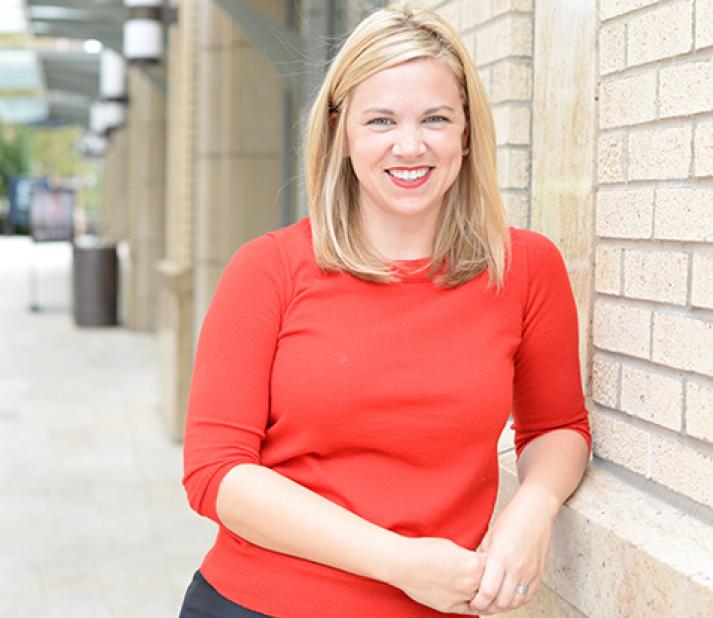
Alumna Sarah Reeves Young, standing outside by school building
Sarah Reeves Young ’05
Prior to working for the Utah State Office of Education in her current role, Sarah Reeves Young was the state’s K-12 STEM Liaison and science coordinator. She was selected to be the Albert Einstein Distinguished Educator Fellow the National Science Foundation 2011-2012. She is also the author of Gourmet Lab: The Scientific Principles Behind Your Favorite Foods. She graduated from the Master of Education in Middle School Education at Lesley.
https://www.lesley.edu/article/becoming-a-school-leader.