From: https://www.pinterest.com/pin/1138566349523520274/?fbclid=IwAR2Mf-BfgbBlkHD7iKQnFj_78lqulm2ffOFpXCZ_NGMgLVdOkQUIY9yQHy0

From: https://www.pinterest.com/pin/1138566349523520274/?fbclid=IwAR2Mf-BfgbBlkHD7iKQnFj_78lqulm2ffOFpXCZ_NGMgLVdOkQUIY9yQHy0

From:
https://messymotherhood.com/50-calm-down-tips-for-parents/?fbclid=IwAR0tYGZgednv6Rz_-hK_W-p9jxBFeAtoIX7rtFGRD159Tb-RMSQKKkvUUGs
From:https://www.edutopia.org/article/help-young-students-transition?utm_source=Facebook&utm_medium=Social&utm_campaign=BTS23&utm_id=BTS23&utm_term=back+to+school&utm_content=self+regulation&fbclid=IwAR1WT7MQhOmNgjBES6sAxpgIB5we_aTUaCKCGnSBdQ7UxWH6YRX_BZ0xK5w
To help young students learn to manage transitions between activities, consider these simple whole class exercises.

In my 15 years as a practicing school-based occupational therapist and evaluator, one of the main areas of concern I’ve identified within the academic setting centers around transitions, specifically with preschool and elementary school populations. The new school year is a big transition, so it’s important to give students supports to help them manage both big and small changes.
Consistently leading all students in the exercises and using the tools I offer below before transitioning out of the classroom or between activities should help to decrease and prevent related difficulties.
For students experiencing high levels of emotionality, transitioning can be a very difficult task. Having to exit a familiar environment, stop a preferred or familiar task, and leave that consistency can feel frightening. Providing the strategies outlined below at all transitions creates a calming routine, which is regulating, while the exercises are designed to keep students out of a fight-or-flight mode.
Students who seem to be experiencing low energy, high energy, or strong emotions during transitions can benefit from the following suggested strategies:
Stretch and bend: Directions for students: Begin in a standing position. Straighten your legs all the way up to your hips until they feel nice and tight. Use your right arm to help you bend your left knee toward your shoulder, and hold this position for five seconds. Come back to a standing position. Use your left arm to help you bend your right knee toward your shoulder and hold for five seconds.
This is a nice activity to do before transitioning, as the balancing component provides vestibular input, decreasing fight-or-flight from an emotional and physical perspective. Focusing on the balancing component can also act as a distraction from the transition itself, thus adding a further emotional component.
Walk and squeeze the whole body: This large movement exercise is especially helpful in relation to focus/sustained attention while participating in a motivational game. Students are grounded while keeping hands on their hips as they listen for the direction to freeze, thus addressing attentional skills. Making the body into a tight muscle incorporates proprioception, decreasing fight-or-flight from an emotional or physical perspective, while also waking up the body if there’s low energy.
Directions for students: Start in the Mountain Pose. Move your hands to rest on your hips. When your teacher or movement leader says “Freeze,” freeze your body and make your entire body into a muscle—squeezing all your muscles in your body until you feel them shake. Once you hear your teacher say “Relax,” release the muscles and place your hands back on your hips.
Sunglasses and/or a hat: Wearing sunglasses indoors can help reduce glare from bright lighting and make classes and spaces that feel overwhelming more manageable. Wearing a hat with a brim, such as a baseball hat, blocks out part of the visuals in the environment and can make students’ space feel calmer. It also can provide deep pressure to the head. Decreasing the more noxious visuals within the environment can decrease the fight-or-flight response from an emotional and physical perspective. If the hat is fitted (but not too fitted), it provides a calming compression around the head, thus also decreasing fight-or-flight reaction from those perspectives.
Directions for students: Are you bothered by bright lights or by seeing too many people or things nearby? Wearing a hat with a brim (e.g., a baseball hat) can help by blocking what you see. Make sure that it’s fitted (but not too tight). This can also make your body relax when there are too many things to see and hear by telling your body where it is. Wearing sunglasses can make bright lights less bright (think of those fluorescent bulbs), both inside and outside. This can be especially helpful when going from one place to another and there’s a lot of noise around you.
Being consistent with having students do these exercises and use the above tools before transitioning should help to decrease and even avert related issues.
From: https://www.edutopia.org/article/role-emotion-co-regulation-discipline?utm_source=Facebook&utm_medium=Social&utm_campaign=BTS23&utm_id=BTS23&utm_term=back+to+school&utm_content=emotion+co-regulation&fbclid=IwAR2hd7djY5tsFs1rmYkeC2bZD-k-vpvqOqgM0hSL1B5qp0xbyYlqPVN6yDU
Helping students regain their calm after misbehavior doesn’t mean there are no consequences—it ensures that the right lesson is learned.

Our schools are currently seeing a dramatic increase in students of all ages carrying in anxiety, adversity, and trauma from a variety of adverse childhood experiences (ACEs). Social and emotional learning programs are critical for addressing these emotional and mental challenges, but we must also rethink our discipline procedures and policies. We need to understand that traditional discipline works best with the children who need it the least, and works least with the children who need it the most. Discipline ideally is not something we do to students—it should be a quality we want to develop within them.
For students with ACEs, traditional punishments can unintentionally retraumatize and reactivate their stress response systems. Recent research in school discipline is grounded in the neuroscience of attachment, which emphasizes the significance of relationships. Those relationships begin with an adult in a regulated, calm brain state. It takes a calm brain to calm another brain—this co-regulation is something that students with ACEs may have missed out on. Their school can be an environment where they feel safe and connected even when they make poor choices.
This doesn’t mean giving students a pass for misbehavior: There are still consequences for poor choices, but regulating the feelings and sensations a student is experiencing is the initial step, one that is critical for a sustainable change in behavior.
Emotions are contagious, and when a teacher is able to model a calm presence through their tone, facial expression, and posture, students are less likely to react defensively. When the teacher listens to what is beneath the behavior, focusing on the student’s feelings, this type of validation says to the child that the teacher sees them and is trying to understand. When the teacher takes deep breaths, gets a drink of water, and creates space for reflection for a minute or two, they are modeling the regulation skills they want to see from students.
If I’m the teacher, co-regulation—the process of helping a student who has made a poor choice of behavior to regain their composure—begins with the awareness of my own sensations and feelings when I am disciplining the student. It entails a willingness to regulate my own brain before I act on that discipline. Personally, I try to commit to three quick routines that feel doable to calm me in a short period of time: taking three deep breaths, texting a friend or pulling an affirmation from a prepared jar, and stretching and moving for a minute.
It’s much better to wait for a few minutes when we’re feeling irritated and angry before we discipline, and this is also excellent modeling for students. Students read our nonverbal communication, so paying attention to our facial expression and posture in addition to our tone of voice is critical when teaching the behaviors we want to see.
Focusing on the student’s sensations and the feelings that lie beneath the behavior help us to understand the root causes and patterns of a behavior we might discover when there is rising irritation and anger. I may have a minute or two to redirect—by suggesting that the student go and get a drink of water or take a couple of deep breaths to calm down with me before we talk about the problem.
Creating a friend-in-need system could be helpful so each student has a buddy or even another adult in the building to go to when they begin to feel agitated. For the friend-in-need system, teachers ask students to select one or two peers or adults at the school who they trust and feel comfortable with if they need to take a break and be in another environment or talk through those challenging moments. This is preventative discipline and a way for students to have options when they begin to feel negative. These calming strategies are taught ahead of time and become a part of our procedures and classroom agreements or guidelines.
Validation is powerful way to calm an agitated and angry student. It’s calming to be understood and felt by another. Some things you can say to help a student feel validated:
Validation opens the door for teacher and student to discuss choices and consequences and to create a plan of action for the next time there’s a conflict.
I once heard that it is critical that a teacher’s brain should resemble a thermostat rather than a thermometer when it comes to disciplining a student. What does this mean? Like a thermostat, the teacher needs to maintain a steady temperature throughout a moment of conflict, with a goal of creating conversation and a plan of action with a student who understands their choices and the consequences of those actions. The teacher needs to model the behaviors they want to see and to model self-care and respect during the discipline process.
From: https://socialjusticebooks.org/booklists/banned-books/?fbclid=IwAR15Ghog3-UOqYrYMx_vMnMGXl-T4iL6PR_EdjkdNaHi4QcAmFY89vYrbRI
Elementary | Middle School | High School | Educators | Not Recommended | Learn More
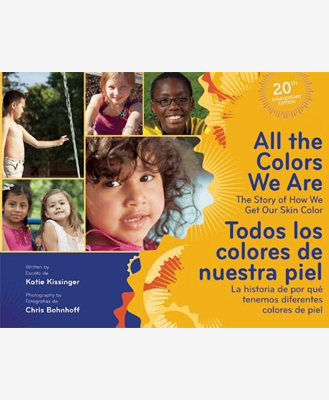
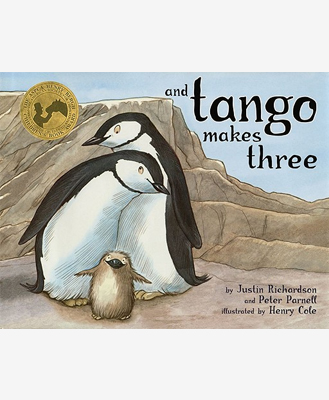
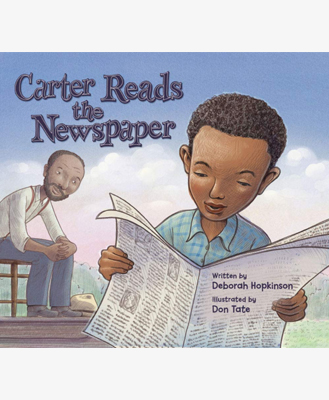
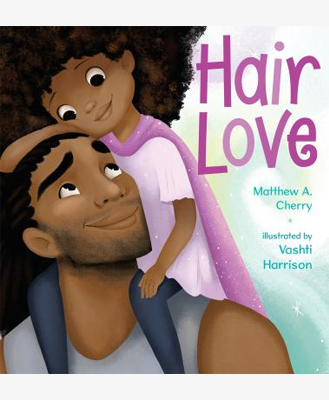
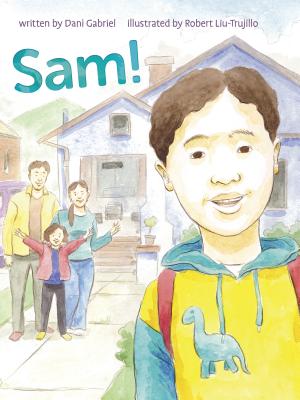
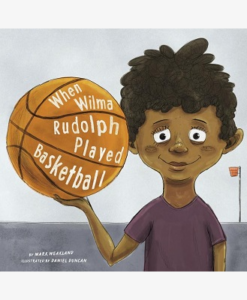
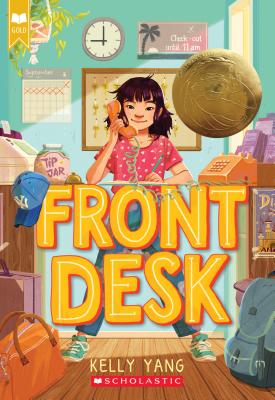
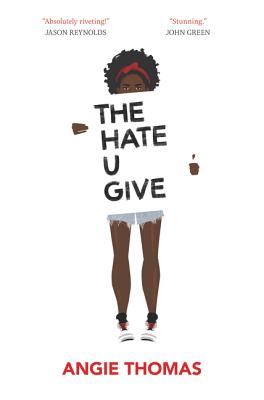
 According to PEN America, book bans and challenges have increased exponentially since 2021, and hundreds of books are being taken off shelves and out of classrooms. The majority of banned books are written by and about Black, Indigenous, Latinx, Asian-American, and LGBTQ+ authors and characters whose stories speak powerful and important truths about history, identity, resilience, and imagination.
In response, many people are hosting banned book readings, giveaways, and displays. To support these efforts, we created a list of some of our favorite banned books.
How do we know these are banned books? Most of the titles are in the comprehensive PEN America database. A few titles were reported to us directly by teachers.
There are some “top ten” banned books that get a lot of attention and, consequently, increased sales — while others risk going out of print due to the censorship and limited limelight. For this reason, our list does not include many wonderful authors whose books we also recommend, such as Speak by Laurie Halse Anderson, All Boys Aren’t Blue by George Johnson, and Beloved and The Bluest Eye by Toni Morrison.
Titles that we recommend are featured below. The ones with reviews have an asterisk (*). At the end of this page is a list of titles that we do not recommend.
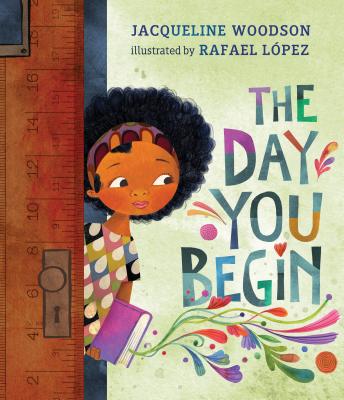

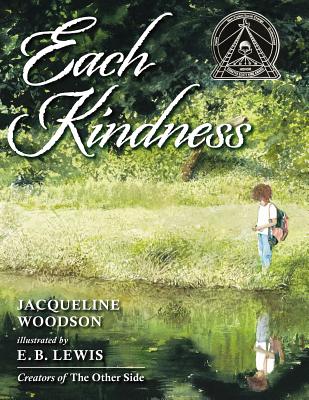 Each Kindness *
 Last Stop on Market Street*
 The People Shall Continue *
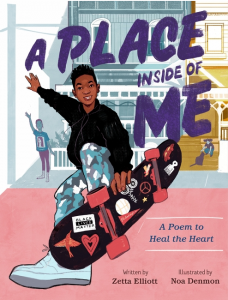 Place Inside of Me: A Poem to Heal the Heart
 Bayou Magic
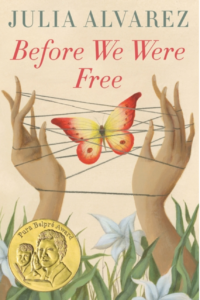 Before We Were Free *
 The House on Mango Street
 Ninth Ward


 Juliet Takes a Breath *
 The Marrow Thieves*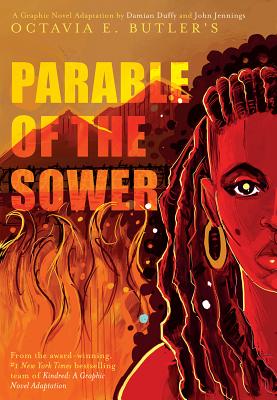

 Pedagogy of the Oppressed: 50th Anniversary Edition *