https://atlantareads.org/2013/04/reading-skills-pyramid/reading-skills-pyramid/?fbclid=IwAR2Os9xjm1rhpszGWrOYWSA5-DMsQ7mYlLpzvt4yxP0GdcgsWgFW-DIE_QY

https://atlantareads.org/2013/04/reading-skills-pyramid/reading-skills-pyramid/?fbclid=IwAR2Os9xjm1rhpszGWrOYWSA5-DMsQ7mYlLpzvt4yxP0GdcgsWgFW-DIE_QY
From: https://www.edutopia.org/article/creative-formative-assessments?utm_source=Facebook&utm_medium=Social&utm_campaign=Fall+23&utm_id=Fall23&utm_term=fall+school+season&utm_content=formative+assessments&fbclid=IwAR0KkqhpghFbGM2MwohiXoJJBzDqgEbE3zufdxbhk_dJzL3J-PCx31NkVao
Sometimes mixing in formative assessments that go a step beyond exit slips and low-stakes quizzes can inject some fun—and creativity—into learning.
It’s always better to know if a student is struggling before a big test is in the rearview mirror. But students often lack the self-awareness to monitor their own learning, and may struggle to work up the courage to ask for help. Others may overestimate their mastery of important ideas and concepts, tricking their brains into thinking they’re prepared for a test when they’re not.
So when it comes to student learning, how can you tell what's sticking—and where additional instruction or review could make a difference?
Formative assessments are typically short, gradeless ways to evaluate what students know while they’re still in the process of learning it. When used early and often, they can shine a light on individual student progress, serve as general indicators of how the class is doing as a whole, and inform subsequent instruction. This process of actively checking in with students on their journey toward mastery is “especially effective when students are given tactical feedback, immediately followed by time to practice the skill,” says Todd Finley, a tenured professor of English education at East Carolina University.

Sign up for the Edutopia Weekly, a newsletter with personalized, time-saving strategies shared by experienced educators and backed by evidence.
Yes, I want thatQuick checks for understanding aren’t new, of course, but when time allows, occasionally injecting an element of creativity into formative assessments can deliver unexpected benefits. For example—regardless of a student's artistic talent—research suggests that drawing the information they’re learning can increase student recall by nearly double. And when kids are encouraged to tap into their imagination to show what they know, they tend to ask more innovative questions of themselves, brainstorm fresh solutions to problems, and synthesize material in original and surprising ways.
Here are 13 formative assessment strategies that lean into creativity—inspired by the work of several Edutopia contributors, and from Finley’s handy list of quick checks for understanding.
Simple Symbols: Sketchnoting—simple, hand-drawn renderings of things like facts, dates, or abstract concepts—can be a great way to help students process vocabulary. Educator Wendi Pillars has her students co-create a symbolic language library, working together to visually represent important terms from a unit. After choosing 10 terms, students develop an icon or character to correspond with each one. For example, a drawing of a sun can represent energy or a tree can represent life.
Write a Letter: On a sheet of paper or an index card, ask students to explain a new concept they've learned in the form of a short letter to a friend or family member, pretending the other person is new to the information. This process of explanation can open students' eyes to what they know and what they don't, explains Woo-Kyoung Ahn, a psychology professor at Yale University who uses a similar strategy with college students before exams.
Tweet Like a Historian: Challenge students to enter the minds of popular historical figures, tweeting about major events in the figure’s life as that person would have, suggests former educator Matthew Lynch. To get a firm grasp on how well students understand their chosen figure, ask who their figure might be following on social media, as well as topics that would be “trending” on their feed at the time. Educator Jill Fletcher prefers to use a paper template so that students can engage in the exercise without going online.
Playful Pamphlets: An effective brochure is easy and engaging to read, and offers eye-catching design. Ask students to create their own brochures that describe the key features of a concept, or to explain a historical event or scientific discovery. This can be done using paper and art materials, or digitally using applications like Canva or Google Slides.
Do It Yourself TED Talks: Most students are familiar with TED Talks, this strategy provides them with the opportunity to give their own. Educator Katy Farber describes them as "one person’s short presentation of an idea worth spreading." After showing an example that students can model, ask them to find an idea worthy of spreading from the day's lesson and create their own speeches to present the information. Those who feel comfortable can share with the class.
Comic Creators: Using digital creation tools like Canva, kids can create their own comic strips to connect new material and information from past units. The comics shouldn’t be a "regurgitation of knowledge," explains Andrew Miller, director of teaching and learning at the Singapore American School. Instead, they should have an authentic purpose, making it a fulfilling exercise where students create products that are informative and useful to peers. After a lesson on nutrition, for example, students could make comics that explain the major nutrients—as well as the role they play in how bodies function—that could be displayed in hallways for classmates to learn from.
Build-a-Billboard: Have small groups work together to create an advertisement, with visuals and text, to highlight a newly learned concept like Manifest Destiny or the scientific method. Students in San Francisco Unified School District health classrooms learn about tools advertisers use to convince people to buy their products, then create their own billboards. "If you were going to make an ad for your favorite fruit or vegetable, what techniques would you use?” asks health ed content specialist Christopher Pepper.
Sing It Out: Asking students to sing or rap about a lesson can be a fun change of pace—and rack up a few giggles. First, students identify the main concept of a lesson and list related keywords. In a rap about the order of operations, for example, educator Alex Kajitani lists “operations, order, parenthesis, exponent, multiply, divide, add, and subtract.” Using the website RhymeZone.com helps identify what words rhyme with each key term, then students can begin writing their rap, song, or even spoken word poem.
Illustrate Connections: “A student who draws as they learn considers the following: How should I represent the relationship between these parts? How large/small should I draw these parts? What shape should they be? Where do I place each part?,” explains instructional leader Shveta Miller. Invite students to draw a picture that illustrates a relationship between terms from the lesson or recreates a scene from their reading. Providing reflection questions like "How well did I recall the material after having represented it in my drawings?" or “When would drawing as I learn be useful? When is it not useful?” can be a useful add-on to the exercise.
60 Minutes: Students pair up and pretend they're a guest expert on the television program 60 Minutes or their local news broadcast. During their segment, they'll need to answer a few of their partner's interview-style questions—"What is the purpose of feudalism in a society?," for example.
Laughable Lists: At the end of a lesson or once students have finished assigned reading, ask them to enumerate what they think are the top ten most important takeaways. The twist? Students will have to try to infuse humor into their list of observations. Sharing a few examples before they begin can help students who might struggle with the exercise at first.
Cut and Paste: Encourage students—on their own, in pairs, or in groups—to make either digital or paper collages to demonstrate their understanding of the lesson's major themes and concepts: anything from matter and energy, to fractions and decimals. If time allows, have a few kids present their collages to the rest of the class and explain their thinking.
3-2-1 Action!: Choose a selection of excerpts from a recently read text—like a poem, play, or a short story—for students to dramatically interpret and perform. Without the use of props, costuming, or sets, students must not only have read the text but understood it enough to convey an insightful character analysis, as well as the mood and tone of the scene. These 5-minute performances can be recorded and submitted to the teacher to review, or shared in class for peers to see.
From: https://macnamara.0footprint.net/wp-content/uploads/2023/08/why-play-matters.jpg?fbclid=IwAR1w3DhmuOfwJ5DPzHvUC425xWhg0msJN3mJ-nSBDkC3gF59K0gQ7Dco8f0

From: https://www.facebook.com/profile.php?id=100086597888244
Nature and Wildlife
A teacher gave a balloon to every student, who had to inflate it, write their name on it and throw it in the hallway. The teacher then mixed all the balloons. The students were then given 5 minutes to find their own balloon. Despite a hectic search, no one found their balloon.
At that point, the teacher told the students to take the first balloon that they found and hand it to the person whose name was written on it. Within 5 minutes, everyone had their own balloon.
The teacher said to the students: "These balloons are like happiness. We will never find it if everyone is looking for their own. But if we care about other people's happiness, we'll find ours too."
May your day be filled with happiness. 

From: https://www.gse.upenn.edu/news/educators-playbook/6-tips-explaining-war-children
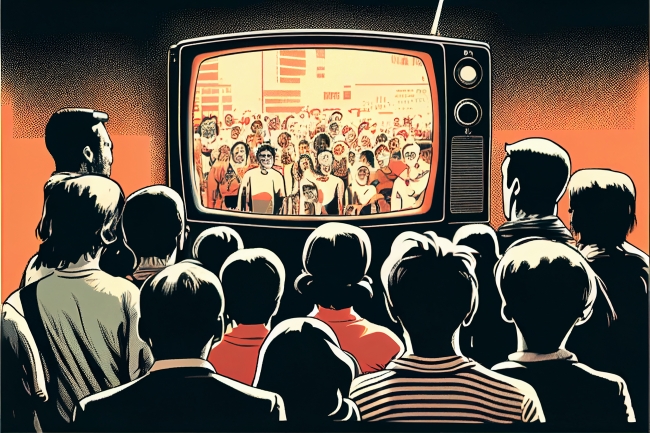
Image: Lazy_Bear/Adobe Stock
In an ever-changing world, parents and educators are too often faced with explaining complex and challenging events to children. And perhaps nothing is more difficult to explain than violence, particularly war and armed conflict.
Navigating those conversations is hard – but not impossible, says Marsha Richardson, Director of Penn GSE’s School and Mental Health Counseling Program.
She explains that adults must help bridge the gap, offering support and understanding as school-age children navigate and process world events in a healthy and constructive way.
“When it comes to issues like (war), sometimes we can find it hard to connect the dots between a child’s behavior and the events unfolding in the world around them,” explains Richardson. “This is about being in tune with and understanding, developmentally, the ways in which these stressful situations might manifest for children.”
To help you prepare, Richardson offers the following tips:
First, do some self-reflection
Before trying to talk a child through this, take the time to self-reflect on your emotional state and your political, moral and religious views. Consider that these will influence how you respond to the situation, conversation, and questions a child might have. Doing this ahead of time helps you avoid figuring it out for yourself in front of them, which is very important to younger children. Parents, in particular, should strive to remember they are the model for their child's emotional regulation.
Keep the child’s age in mind
When dealing with conversations around such complex situations, it's easy to forget the age of your audience. As you approach talking about the war with a child, consider their age and developmental stage — and respond to their questions and comments accordingly. To use an ongoing conflict example, an age-appropriate response for elementary school students about why Russia and Ukraine are fighting could be, "They are fighting to figure out who's in charge of the country." The response to that question for an older child could be, "They are fighting to gain power over a country that has a unique position in world politics."
Remember, too, that the child's age could determine the nature of their concerns. For example, younger children may focus more on safety and security issues, primarily for themselves and their loved ones. At the same time, middle schoolers may be more focused on factual information, and high schoolers will have begun assimilating the values of caregivers, school, peers and media. With a younger child, you may need to reassure them that you and their country are ensuring their safety. With a middle-schooler, you can provide accurate information and engage in further research alongside them. With high schoolers, you can help them think critically about what they know, how they obtained that information, and how they might consider the broader context of their role in current or future influence on these issues.
Get out in front of misinformation or biases
For children of all ages, be sure to ask them what they know. Correct any misinformation or negative generalizations they may have — such as “all Russians are bad” in the example cited above — and provide them with the truth and context they need. Convey that those generalizations are particularly hurtful for some of their class- or schoolmates who may be Russian or Ukrainian. Those students, some of whom may still have close family in Russia or Ukraine, may be experiencing heightened anxiety, isolation or even bullying.
Consider limiting news consumption
Parents of younger children should limit their child's access to news coverage of the war. We might not think twice about leaving CNN or another news channel on all day when such significant world events are occurring, but the constant stream of wartime stories, images and sounds can be very overwhelming for a small child. Traumatic videos and photographs of dead bodies and bombings frequently make it to air in these situations. While older children might be better equipped to deal with the shocking imagery of televised war coverage, you should still sit down with them and help them process what they hear and see.
Look for changes in behavior
Caregivers should also pay attention to any regressive behaviors that might manifest, as some children won’t be able to articulate their stress over what’s happening. Things to look for include thumb-sucking, requesting to sleep in your bed, increased tearfulness, a drop in grades or somatic complaints like headaches, stomachaches and sleeplessness. Maintain an open line of communication with your child's school, teachers, and counselors if you suspect behavioral changes are impacting your child's learning and interpersonal relationships. Teachers should similarly be on the lookout for behavioral changes and keep parents apprised of any that might come up.
Don’t be afraid to reach out
Finally, seek support within your personal and professional spheres to help you manage your distress. If you're having trouble processing things emotionally, it's more than likely your children or students are, or will, be impacted.
Marsha Richardson is a distinguished clinical psychologist with a wealth of experience in mental health counseling, particularly concerning school-age children and adolescents impacted by trauma and conflict. As a senior lecturer and the director of Penn GSE’s School and Mental Health Counseling Program, she has been instrumental in developing and overseeing school-based mental health programs. As a renowned and well-respected voice in child and adolescent development, her insights are particularly valuable in the context of international armed conflicts and their impacts on the young generation's mental health and well-being.
An earlier version of this Playbook first ran in February 2022; it has been revised in light of escalating violence in the Middle East.
From: https://reformjudaism.org/reform-jewish-life/youth-family-community/parenting/how-talk-children-about-conflict-israel
As news comes in of the ongoing conflict in Israel, many Jews are challenged to reconcile conflicting thoughts and emotions. Strong and heartfelt as our commitment is to the security of Israel, we experience a sense of grief at the ongoing violence and over the loss of life in Israel as well as among Palestinians. With reports of anti-Semitism, we may experience additional anxiety.
We want to offer some explanation to our children that will be both truthful and in some way reassuring. We want our children to be trusting and hopeful and to feel secure. We want them to believe that things can get better, and that their efforts and those of people around them can make a positive difference. We want them to be resilient - to be able to experience sadness and fear when appropriate but to be able to recover their joy and confidence. We want them to believe that people can and should resolve problems without violence. When we ourselves are feeling shaken and uncertain, we naturally find it difficult to choose our words.
There are no simple answers, but Jewish tradition teaches us to face difficult questions and difficult times by gathering together to develop responses that best reflect our values. It is in this spirit that we offer some suggestions, knowing that every parent, grandparent, teacher and friend will adapt these to create responses that are right for the children in their lives.
Speaking with a trusted adult who can listen and provide age-appropriate responses is far better than hearing from peers or news reporters. It's also vital that adults take care of themselves by avoiding repeatedly listening to and viewing the details of upsetting, terrifying events. Such continuous exposure to media, which may cause feelings of overwhelmedness and trauma, is not good for adults for their own sake, and also because anxiety is conveyed to children. Those living in the midst of the situation (i.e. in Israel) may not be able avoid awareness but can still seek to distract themselves and their children by engaging in ordinary life to the degree possible.
Don't provide more information than requested, and avoid gory details unless they bring them up. Even when children do mention such things, the conversation can be gently steered to a less frightening place by acknowledging that these things are true, frightening, and disturbing, and - if it is the case - taking place far away from home. If you hear distortions, provide corrected information. If you sense a child has heard something but is not speaking about it, gently ask whether something is worrying him, or provide her the opportunity to draw or show concerns in other ways.
Deep breathing, singing, and movement can be adapted for people of all ages and are highly effective at helping to manage stress and fear. Seek online or community resources to find approaches that are right for your child. Local Jewish Community Centers (JCCs) often provide such programs.
The youngest children need simply to have the conflict acknowledged, if they have already heard of it.
School-aged children often will have heard more about what is going on in the news. Because they grasp more facts, adults may forget they are still children and need to be made to feel as secure as possible.
Teens are likely to have the most details and the most difficulty in seeking the help they need to process something as disturbing as war. They want to seem independent, yet such events may stir strong feelings of helplessness and fear; they do not want their independence challenged and yet need protection and reassurance.
Help them to assist those who have been affected and to honor the memories of those whose lives are lost through acts of kindness and repair of our world. Everyone feels better when they can do something effective and positive in the face of a situation that has made them feel grief and helplessness. You can help them to make condolence cards, write letters to families who have experienced loss, send friendly and supportive letters to others affected by war, collect tzedakah for organizations that work to help people who have been injured or displaced, participate in religious rituals like prayers for peace and security, light candles in memory of those who have died, and create ways of honoring and supporting military, rescue and medical teams.
Even when we don't have the answers, most of us are helped by coming together with community members to affirm our belief in goodness, restraint, compassion and justice. We and our children may have questions about how to have faith in God in the face of warfare and terrorism. Some find solace in the idea of God as a consoler, a guider toward right action and a maker of peace. Others find solace in the hope that the people who die are now with God. Jewish tradition teaches us to comfort, support and inspire one another at times of tragedy and conflict. Through our actions and spiritual practices we remind one another and teach our children that love and life are very precious and worth sustaining, and though wars are sometimes unavoidable, we must continue to seek peace.
When, over the course of many weeks, a child continues to show a great deal of fear and anxiety, is more withdrawn, provocative, and defiant, or continues to be involved in repetitive play with themes related to violent events, it is useful to seek consultation with a mental health professional. Of course, if a child shows serious distress and cannot be consoled, exhibits or threatens violence towards himself or others or is paralyzed by fear and anxiety, seek help immediately. When parents find themselves struggling to re-establish trust or are overcome by anxiety about their own or their family’s wellbeing, they too can benefit from help in overcoming anxiety and trauma. Social service agencies, mental health clinics, school guidance counselors, private mental health practitioners and pediatricians may all be helpful. Specific programs for children and families who have been affected by traumatic violence, even indirectly, can be particularly helpful.


