Tuesday, March 17, 2020

Free Coloring Books from World-Class Libraries & Museums: Download & Color Hundreds of Free Images


There are many roads to wellness. Meditation, yoga, exercise, and healthy diet are all effective therapies for bringing down stress levels. But we shouldn’t discount an activity we once used to while hours away as children, and that adults by the millions have taken to in recent years. Coloring takes us out of ourselves, say experts like Doctor of Psychiatry Scott M. Bea, “it's very much like a meditative exercise.” It relaxes our brain by focusing our attention and pushing distracting and disturbing thoughts to the margins. The low stakes make the activity easy and pleasurable, qualities grown-ups don’t get to ascribe to most of what they spend their time doing.
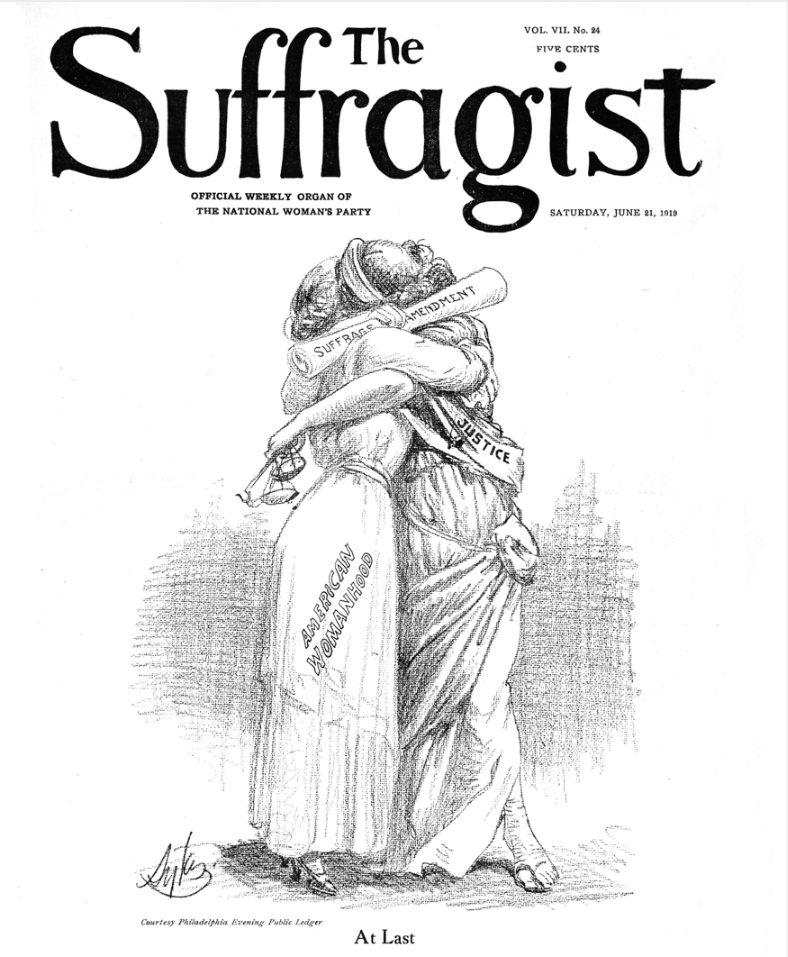
Reducing anxiety is all well and good, but some art and history lovers can’t accept just any old mass-market coloring book. Luckily, a consortium of over a hundred museums and libraries has given these special customers a reason to stick with it. Since 2016, the annual #ColorOurCollections campaign, led by the New York Academy of Medicine (NYAM), has made available, for free, adult coloring books. The range of images offers something for everyone, from early modern illustrations like the cat at the top, from Edward Topsell’s Historie of Foure-Footed Beastes (1607)—courtesy of Trinity Hall Cambridge; to the poignant cover of The Suffragist, below, from July 1919, a month after U.S. women won the right to the vote (from the Huntington Library, Art Museum, and Botanical Gardens).
There are, unsurprisingly, copious illustrations of medical procedures and anatomy, like that below from the Library at the University of Barcelona. There are vintage advertisements, “canoe-heavy content” from a Canadian museum, as Katherine Wu reports at Smithsonian, and war posters like that further down of Admiral Chester Nimitz asking for “the stuff” to hit “the spot,” i.e. Tokyo –from the Pritzker Military Museum. “The only commonality shared by the thousands of prints and drawings available on the NYAM website is their black-and-white appearance: The pages otherwise span just about every taste and illustrative predilection a coloring connoisseur could conjure.”

One Twitter fan pointed out that the initiative provides “a great way to get to know some of the collections held in libraries around the world.” Their enthusiasm is catching. But note that few of the institutions (see full collection here) have uploaded a large quantity of colorable images. Most of the “coloring books” consist of only a handful of pages, some only one or two. Taken altogether, however, the combined strength of one hundred institutions, over four years (see previous years at the links below), adds up to many hundreds of pages of coloring fun and relaxation. If that’s your thing, start here. If you don’t know if it’s your thing, #ColorOurCollections is a free (minus the cost of printer ink and paper), educational way to find out. Grab those crayons, oil pastels, colored pencils, etc. and calm down again the way you did when you were six years old.

Related Content:  
Free Coloring Books from World-Class Libraries & Museums: The New York Public Library, Bodleian, Smithsonian & More
Free Coloring Books from World-Class Libraries & Museums: The Met, New York Public Library, Smithsonian & More
Download 150 Free Coloring Books from Great Libraries, Museums & Cultural Institutions: The British Library, Smithsonian, Carnegie Hall & More
Download Free Coloring Books from 113 Museums
Josh Jones is a writer and musician based in Durham, NC. Follow him at @jdmagness


Monday, March 16, 2020

Storytime for teachers? Or consider making suggestions for your students' parents and guardians!


Storyline Online


Need some help at bedtime? Let Betty White, Al Gore, Lily Tomlin, Kristen Bell, and many others help you out! 

Here are two of SO many more:


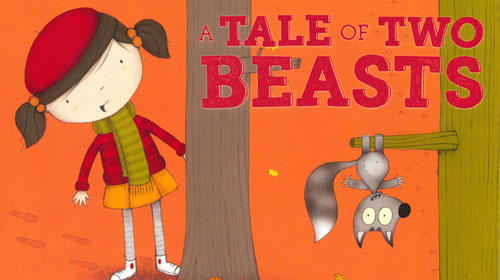
A Tale of Two Beasts


  • Written by: Fiona Roberton
  • Illustrated by: Fiona Roberton
  • Published by: Kane Miller Books
  • Read by: Sarah Silverman
  • Suggested grade level: 1st - 3rd
  • Run time: 7 minutes


A Bad Case of Stripes


  • Written by: David Shannon
  • Illustrated by: David Shannon
  • Published by: Blue Sky Press
  • Read by: Sean Astin
  • Suggested grade level: 2nd - 3rd
  • Run time: 12 minutes


 The SAG-AFTRA Foundation’s award-winning children’s literacy website, Storyline Online, streams videos featuring celebrated actors reading children’s books alongside creatively produced illustrations. Readers include Viola Davis, Chris Pine, Lily Tomlin, Kevin Costner, Annette Bening, James Earl Jones, Betty White and dozens more.

Storyline Online receives over 100 million views annually from children all over the world.

Reading aloud to children has been shown to improve reading, writing and communication skills, logical thinking and concentration, and general academic aptitude, as well as inspire a lifelong love of reading. Teachers use Storyline Online in their classrooms, and doctors and nurses play Storyline Online in children’s hospitals.

Storyline Online is available 24 hours a day for children, parents, caregivers and educators worldwide. Each book includes supplemental curriculum developed by a credentialed elementary educator, aiming to strengthen comprehension and verbal and written skills for English-language learners.

Storyline Online is a program of the SAG-AFTRA Foundation. The Foundation is a nonprofit organization that relies entirely on gifts, grants and donations to fund Storyline Online and produce all of its videos.

Scholastic releases free daily courses for kids stuck home amid coronavirus school closures


This image released by Scholastic Entertainment shows a scene from the reboot of “Clifford the Big Red Dog.” The new show offers more diversity among the human characters and puts Clifford’s beloved 7-year-old owner, Emily Elizabeth, front and center in his Birdwell Island adventures. (Scholastic Entertainment via AP)

Scholastic releases free daily courses for different grade levels aimed at children stuck at home amid coronavirus school closures:

https://classroommagazines.scholastic.com/support/learnathome.html

Friday, March 13, 2020

Excellent Tip for Families about Home Learning form the Learning Personalized blog


5 Tips for Families as They Transition to Home Learning

https://www.learningpersonalized.com/5-tips-for-families-as-they-transition-to-home-learning/


Aaron Roberts
I am a Learning Experience Design in Mason, Ohio. My work in education is about being a creative catalyst. I want to help all learners – educators, administrators, and community members alike – realize their creative potential! Twitter: @RobertsLearns

With the novel coronavirus and COVID-19 prevention plans underway, many parents, guardians, and caregivers have suddenly found themselves in the role of the homeschool teacher. In some cases, schools are figuring out how they can best manage online learning. In other cases, schools are taking an extended spring break without sending learning materials home at all. In each case, adults are suddenly finding a lot of time with young people on their hands.
I see on social media a number of people stepping up and offering ideas and resources to help out parents in this new situation. As you comb and curate those resources, I wanted to offer some of my thoughts on how to deal with this sudden increase in together time.

Create a Routine

Schools generally offer a fairly rigid routine. Bells move students from one class to another. Teachers tend to begin and end lessons with all eyes on them. Students depend on the reliability of these routines. It’s true that many educational thinkers are looking at ways to improve the more excessively standardized parts of these routines. However, a sudden influx of home learning time is probably not the best time to rethink your local school’s bell schedule. It’s probably best to lean into the natural instinct for structured time.
Some school districts are experimenting with a fixed schedule, especially for their high school courses. This may pose a challenge as kids get fidgety looking at a screen for six hours and the virtual routine may be in danger of failing. Not to mention, the tech that drives these virtual experiences may fail as well. Having an established learning routine in the home already can provide a contingency plan in case this learning process doesn’t work out the way some educators are hoping.
This doesn’t mean that you want to plan six hours of overly structured activity yourself. Unstructured playtime can be a powerful learning tool. If your school is using asynchronous strategy or using an unstructured “extended spring break,” you do want a plan for how you want each day to go. When will activities occur? When will free time occur? How about meals? You don’t have to be on your own with this. Your own child can be a great resource for creating these routines. Which brings me to my next tip.

Co-build Learning Experiences

You’re not on your own! Your child can and should be a huge part of putting together experiences and routines. You won’t likely be teaching to a test or specific state or national standards like your teachers do. However, your goal can be to expand your child’s interests, creativity, and focus through fairly structured activities.
The best resource to find out what might interest your child is your child. In Mike Anderson’s blog post Maintaining School Momentum as Learning Moves Home, he suggests that teachers offer meaningful and manageable choices. He wants teachers to avoid overwhelming students in an at-home learning environment. The same can be said for parents offering options. Ask your students what they feel like doing today. Pepper in your own ideas for activities that you may have found online, read from magazines, or heard from friends. Keep things manageable and in check as your brainstorm together. Have fun building a schedule for the day or week together. You certainly don’t have to do the same things every day. Your kids can be incredibly sophisticated partners in figuring this out.

Use Your Relationships: Figure Things Out Together

Trying new things can be frustrating. As I write this, I can hear my ten-year-old son in the other room getting very frustrated with a Legend of Zelda game. His older sister is a bit better at the game and I can hear her give him helpful feedback. She even seems to be occasionally taking the game controller from him to really help in tough spots. This is a pretty fine example of a learner relationship.
You have relationships, too. Don’t hesitate to ask for help. A single tweet or Facebook post can likely bring a hundred new ideas for you to try at home. Hang on to these because they can be just as valuable during summer or any break from school.

Access Tools Your School or Library Provides

Many schools have online tools for reading and math, especially. Your child may have an established routine on Khan Academy or MobiMax. Many schools use Epic, an amazing online collection of reading materials. Ask them about those tools.
School and local libraries also provide a lot of reading resources. Many libraries offer library cards online if you’re not comfortable visiting one in person right now. With a library card in hand, you can use apps like OverDriveLibby, and Sora. These three apps are variations from the same company that allow you to check out digital resources from libraries.

Think Online AND Offline

Despite my background and love for EdTech, I’m a big believer that tech has to be “right-sized.” That means that offline experiences can be just as valuable as online experiences.
What are the ideas off the top of my head? First, I am thinking about using our dinner time as a sort of daily wrap-up. After my kids engage in their daily activities, I am going to ask them to reflect on them at dinner time. Activities like treasure hunts, walks around the neighborhood, and observations of nature can be great prompts for writing, thinking, and artistic creations. They can practice their verbal skills by sharing those creations at dinner. Reading time can be worked into your routine. Ask your child to share about their daily reading as an end-of-the-day routine.
Asking a child to tap into their imagination can also make new connections in the brain that helps them see learning in new ways. Have a pile of unused toys? Pull them out and ask your kids to create a dramatic play using the toys. Try drawing something from observation. Draw something else from your imagination. Compare the results. Even board games provide meaningful critical thinking exercises. Offline opportunities are endless. Take some time to brainstorm with your kids and build a list together. Use your co-built list as part of your established routine.
I read an impressive brainstorm of one-line ideas from a Twitter thread by educator Wade Whitehead. When there is no curriculum families are beholden to, this thread shows how simple generating activities can be as you keep your child in mind. Don’t overcomplicate your planning process. Try to treat this as an opportunity to connect with your child by creating, exploring, and examining ideas together.

Parting Thoughts

These are certainly uncharted waters for everyone. Extend some grace and patience to everyone involved. That includes your kids, your school system, and most importantly to yourself. Every drastic situation has opportunities. Never miss the opportunities you have right now with this sudden change in routines.
Bena Kallick and Allison Zmuda write that educators can use this event as an opportunity for self-reflection. Taking a similar mindful pause will help you extend the grace that you may need for yourself right now. Check out the questions they pose to educators and consider how you might reflect in the same vein. Close your eyes. Take a deep breath. You’ve got this.
Share this:


Friday, September 20, 2019

A conference for educators in their early years of practice and for prospective teachers enrolled in an educator preparation program


 MTA’s Early Career Educators Conference presents the perfect opportunity to meet with fellow educators and get tips on everything from classroom management to supporting students with a wide variety of needs.  

This one-day conference, brought to you by MTA’s New Member Committee, will also offer workshops on Professional Teacher Status, teaching students with trauma, and strategies for mindfulness and stress management.MTA’s Early Career Educators Conference presents the perfect opportunity to meet with fellow educators and get tips on everything from classroom management to supporting students with a wide variety of needs. 

This one-day conference, brought to you by MTA’s New Member Committee, will also offer workshops on Professional Teacher Status, teaching students with trauma, and strategies for mindfulness and stress management. 


The conference will be held on November 16 from 9 a.m. to 3:30 p.m. at Mountview Middle School in Holden, MA. 

To register and see the full program, go to 

www.massteacher.org/newmembers 

Morning refreshments and lunch will be provided.

Please note: This conference is appropriate for school district and teachers’ use as part of induction programs for all new teachers (603 CMR 7.00). The MTA will provide all conference participants with a record of attendance.


https://massteacher.org/-/media/massteacher/files/about-us/new-members/mta-ece_flier_2019.pdf?la=en